How to read an olive oil label: 7 lines that matter
Start with the category (extra virgin, virgin, refined, olive oil blend), then check the lot number, origin, producer and business registration number, the date and the storage instructions. Together they tell you the grade, where the oil comes from and whether it can be traced.
Two bottles on a shelf can look almost identical. The difference is not in the front-label artwork but in a few lines on the back. Here is what to check, in order.
1. Category
Olive oils are graded by law. The ones you will meet most often:
- Extra virgin olive oil: mechanical extraction only, free acidity of at most 0.8%, no sensory defects. The top grade.
- Virgin olive oil: also mechanical, with an acidity limit of 2.0%.
- Refined olive oil: chemically and physically refined; most aroma and colour are gone.
- Olive oil (blend): refined oil blended with virgin oil.
“Cold-pressed” and “early harvest” are production details, not categories. Look for the category line separately.
2. Lot number
It identifies the production batch. A serious producer ties its lab reports to lot numbers. Olivisimo’s first production reads Parti No: 1 (Lot No 1).
3. Origin, producer and registration number
Origin tells you which country the olives and oil come from. The producer line and the business registration number show the oil was made in a registered facility — the key to traceability. On the Olivisimo label: origin Türkiye, Özgören olive oil facility, Orhangazi – Bursa, registration TR-34-K-290137.
4. Net quantity and the ℮ mark
In “500 ML ℮”, the ℮ is the European estimated-sign: the pack was filled according to EU rules on average quantity.
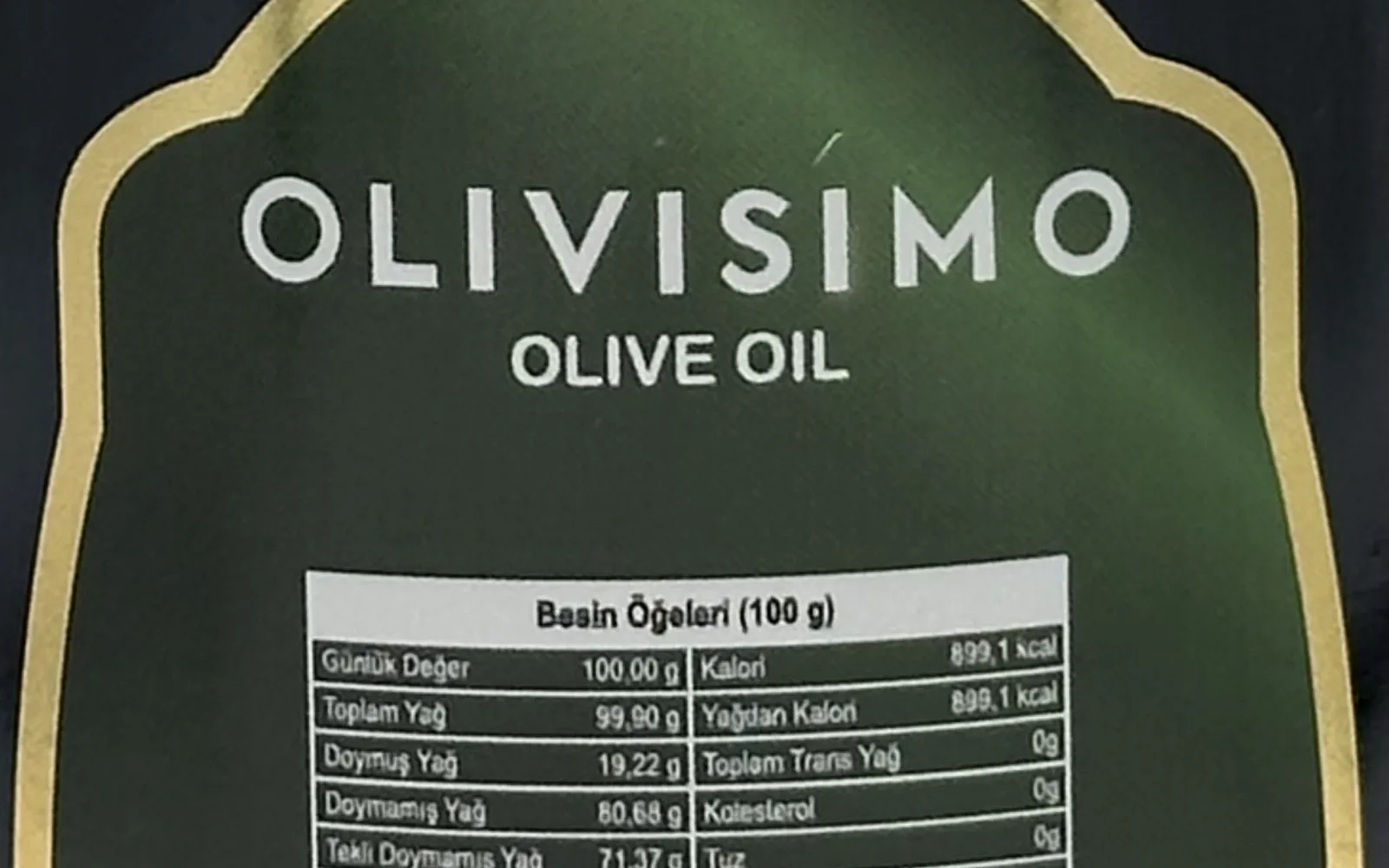
5. Nutrition table
Olive oil is almost pure fat: about 900 kcal per 100 g. What matters is the type of fat. Good olive oil is dominated by monounsaturated fat, with zero trans fat and cholesterol. The Olivisimo label states 71.37 g monounsaturated fat per 100 g.
6. Date
A best-before date is mandatory. Producers who also state the harvest year go a step further: olive oil does not age like wine; the fresher it is, the more aroma and biophenols it keeps.
7. Storage and packaging
“Store in a cool, dry place away from sunlight” is not a formality. Light and heat wear oil down quickly, which is why dark glass or a tin always beats a clear bottle.
In short
Be careful with a bottle that hides its category, lot, origin, registration, date or storage instructions. A producer who states all of them clearly stands behind the oil. Olivisimo’s lab results are in the quality section of our home page.
Frequently asked
What is the difference between extra virgin and virgin olive oil?
Both are obtained by mechanical means only. Extra virgin must have a free acidity of no more than 0.8% and no defects in a tasting panel; virgin allows up to 2.0% and minor defects.
What does the ℮ mark mean?
It is the European estimated-sign, showing the pack was filled according to EU rules on average quantity.
Why does the lot number matter?
It identifies the production batch the bottle came from. Lab reports and recalls are tracked by lot number.