Can you cook with extra virgin olive oil? The smoke point, explained
Yes. Most sources put the smoke point of extra virgin olive oil at about 190–210 °C, while home frying usually happens at 160–180 °C. Its high oleic acid content and natural antioxidants make it heat-stable. Still, you taste an early-harvest oil best raw.
What is a smoke point?
The smoke point is the temperature at which an oil starts to give off visible smoke. Beyond it the oil breaks down quickly and turns acrid. For extra virgin olive oil most sources give about 190–210 °C; the exact figure depends on the oil’s acidity and freshness.
Why is it heat-stable?
The smoke point alone does not decide how an oil behaves under heat. What matters most is resistance to oxidation:
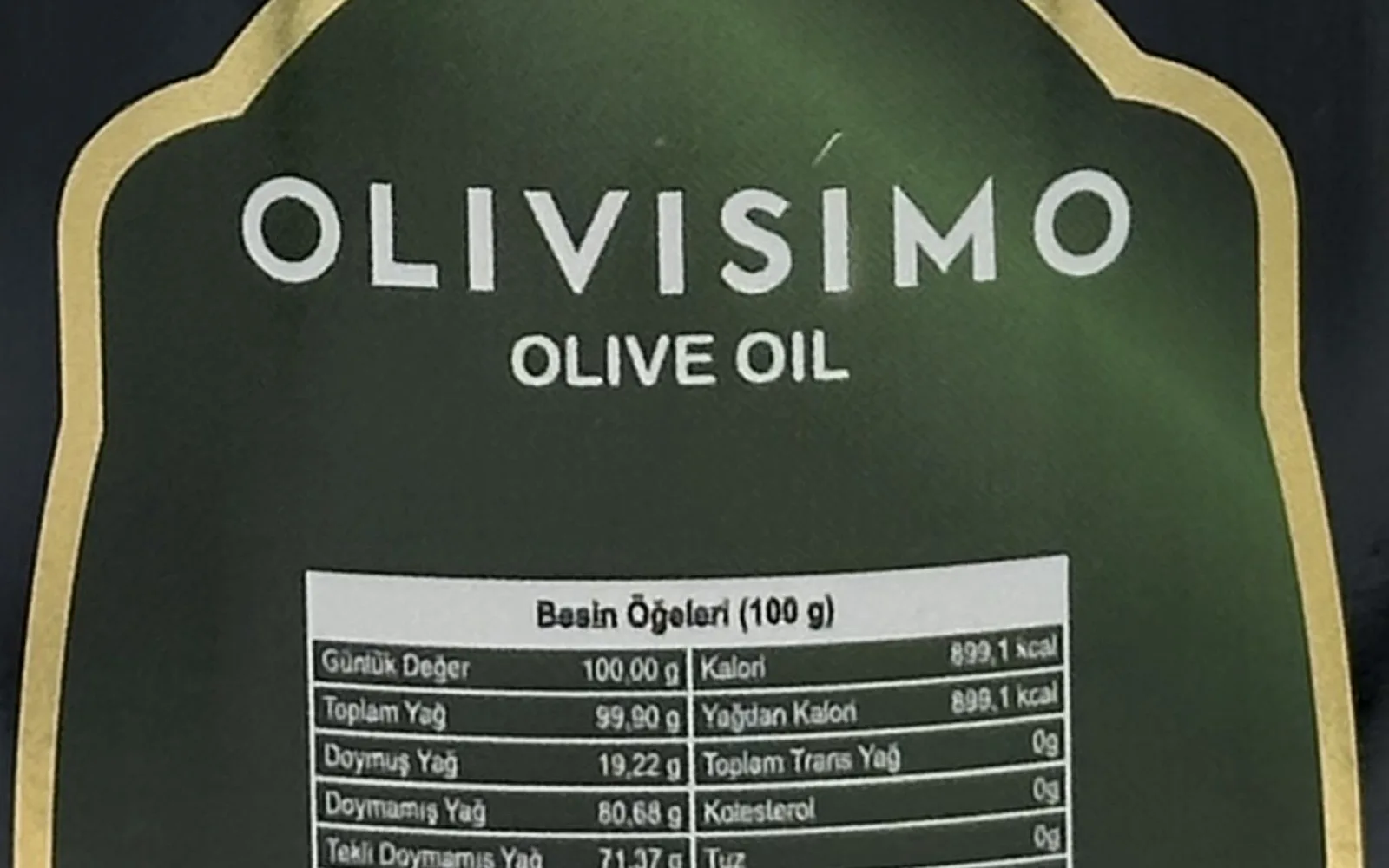
- Monounsaturated fat: most of olive oil is oleic acid (72.41% in Olivisimo), which is far more stable under heat than the polyunsaturated fats in oils such as sunflower.
- Natural antioxidants: polyphenols and vitamin E protect the oil while it is heated.
A temperature guide
| Use | Approx. temperature | Fit |
|---|---|---|
| Raw: salad, bread, hummus | — | Best |
| Finishing: soup, grills | — | Best |
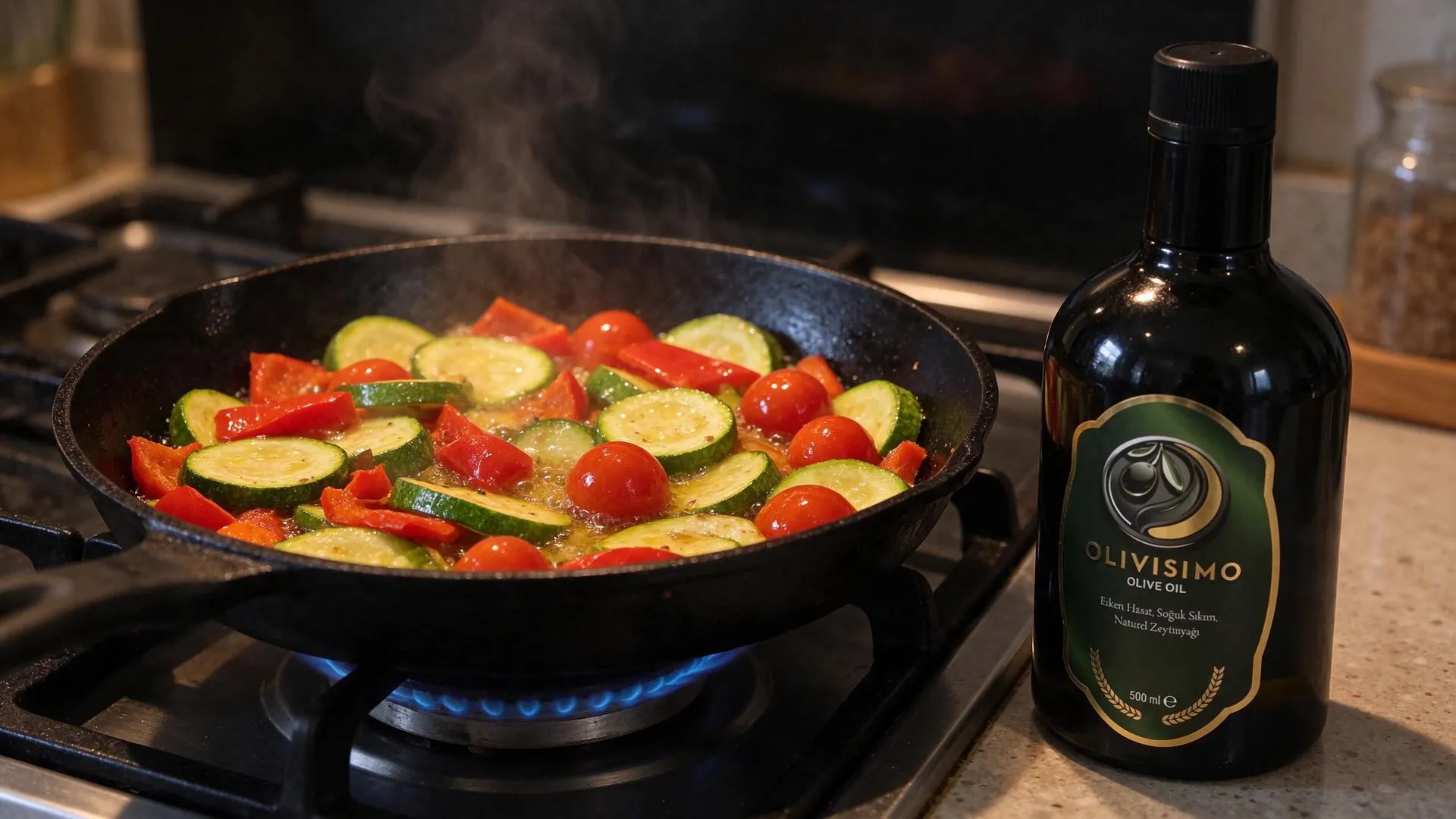
| Sauté, braised vegetables, eggs | 120–160 °C | Very good |
| Roasting | 160–200 °C | Good |
| Frying | 160–180 °C | Good; some aroma is lost |
Practical tips
- Do not overheat an empty pan. Add the oil over medium heat.
- If you see smoke, turn the heat down. Smoke means the oil has gone past its limit.
- Do not reuse frying oil again and again. It degrades a little with every use.
- Do not waste the aroma. The cut-grass notes of an early-harvest oil fade with heat; cooking from the tin and keeping the bottle for the table is a good balance.
Which size for which job?
For everyday salads and finishing, the 500 ml bottle; for generous cooking and busy kitchens, the 2 L tin is more economical. Decant the tin into a small dark bottle for daily use.
Frequently asked
Does heating olive oil make it harmful?
Not when used below its smoke point. Avoid heating it until it smokes and do not reuse the same frying oil again and again.
Which size is better for frying?
The 2 L tin is more economical for cooking with plenty of oil; keep the 500 ml bottle for salads and finishing.